Business Factory Aero (BFAero), the business incubator and accelerator promoted by the Galician Regional Government (Xunta de Galicia) through the Galician Institute for Economic Promotion (IGAPE) and XesGalicia, is launching its 8th edition with the aim of supporting projects that provide an innovative response to the current challenges facing this industry.
Its specialised focus on the aeronautical, aerospace and unmanned vehicle sectors, and its links with industry, set BFAero apart from other initiatives, providing a competitive environment for project development.
Since its launch in 2019, it has supported 49 new projects, more than 80 per cent of which remain active and are continuing to grow. These companies have created more than 320 skilled jobs and generated an annual turnover of more than 28 million euros.
In the last two rounds, BFAero companies have raised more than 14 million euros, with around 70 per cent coming from private equity, confirming the programme’s ability to transform strategic technologies into companies that are attractive to investors.
From technology to the market
The eighth edition of BFAero provides participating projects with expert mentors in areas such as aeronautics, UAV regulations, intellectual property, business management and marketing, with the aim of transforming start-ups into innovative, viable and scalable companies within the aeronautical and aerospace sector.
The accelerator connects projects with a unique ecosystem linked to leading companies such as Airbus, Telespazio and Avincis , and more than 55 organisations – including technology centres, universities and companies in the sector – with which it promotes proactive business networking. It also provides workspaces at the Pazo de Feiras in Lugo, near Rozas Aerodrome and the Rozas Aerial Research Centre (CIAR).
Up to €250,000 in funding
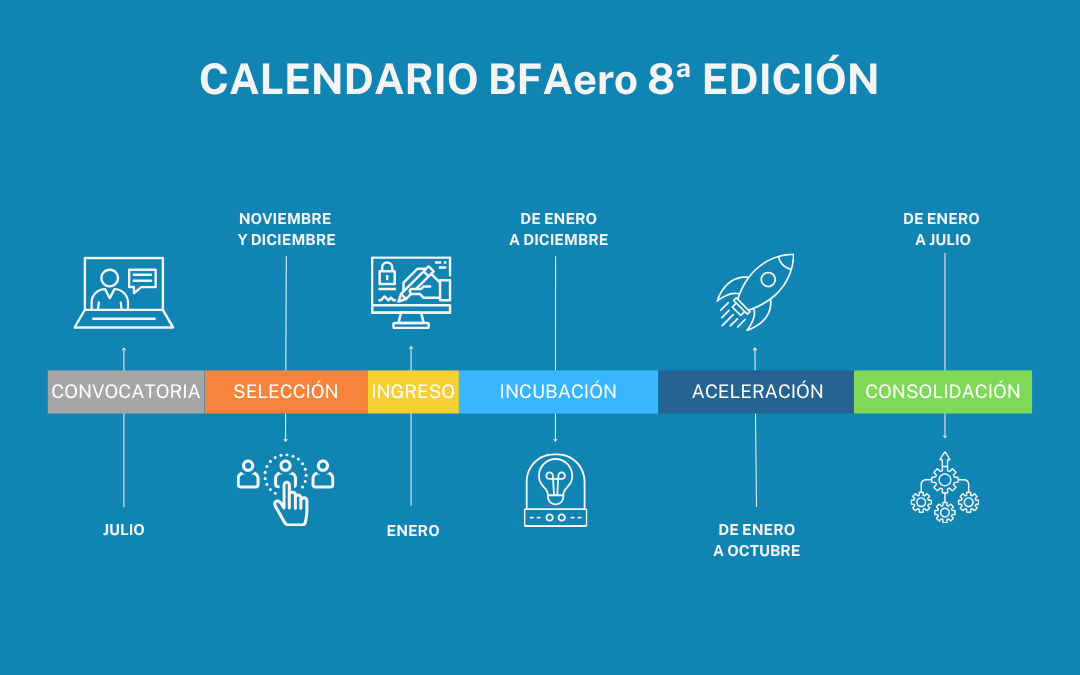
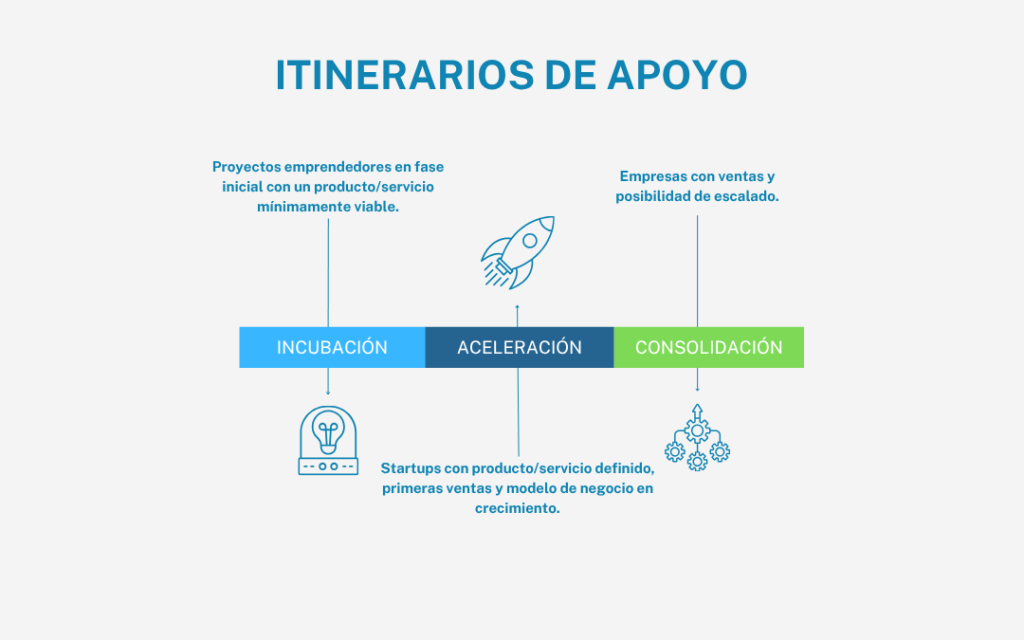
The programme offers three tracks, tailored to the maturity level of each project. Incubation, for the early stage, where the value proposition has not yet been validated, lasting up to 12 months. Acceleration, aimed at projects with a developed Minimum Viable Product (MVP) that are making their first sales, lasting 8 months. And Consolidation, a programme designed for companies with a defined product or service and actual sales, seeking to scale up their business, lasting up to 6 months.
During the Incubation phase, start-ups will have access to non-repayable funding of up to 40,000 euros through the Galician Institute for Economic Promotion (Igape). Projects in the Acceleration phase will receive non-repayable funding from Igape of up to 60,000 euros and the possibility of an equity stake through a participatory loan of up to 50,000 euros, with the option to capitalise this through Xesgalicia, the investment vehicle of the Xunta de Galicia.
Companies in the consolidation phase will be able to access up to 30,000 euros through Igape in the form of a non-repayable grant. Should the company so request, and as part of a funding round, a direct equity investment of up to 250,000 euros may be considered.
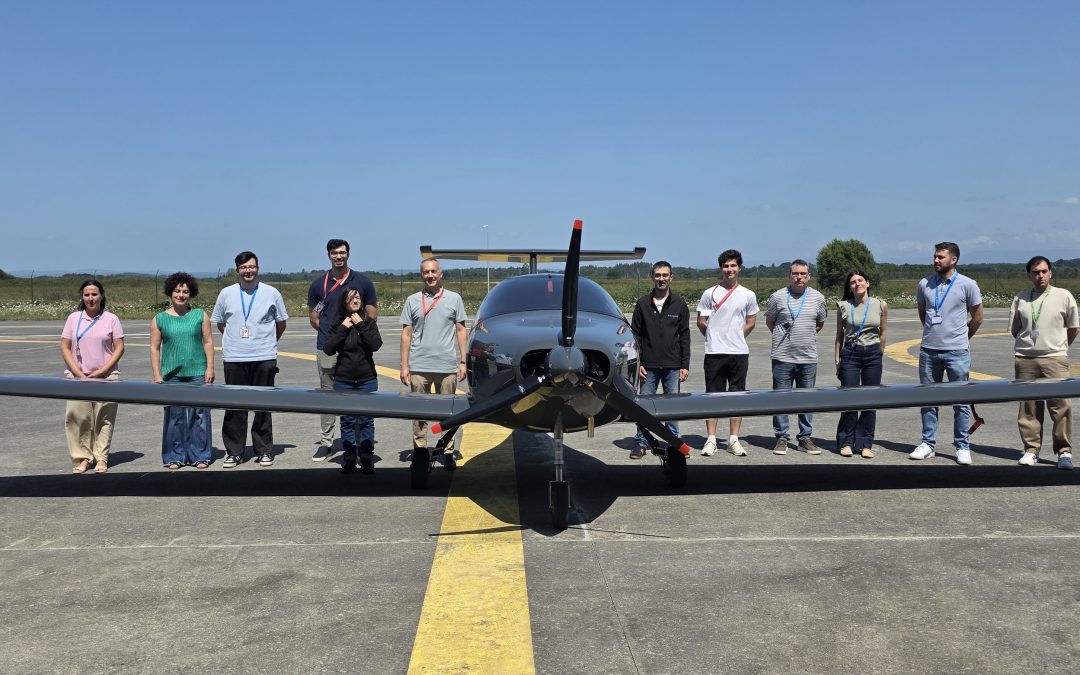
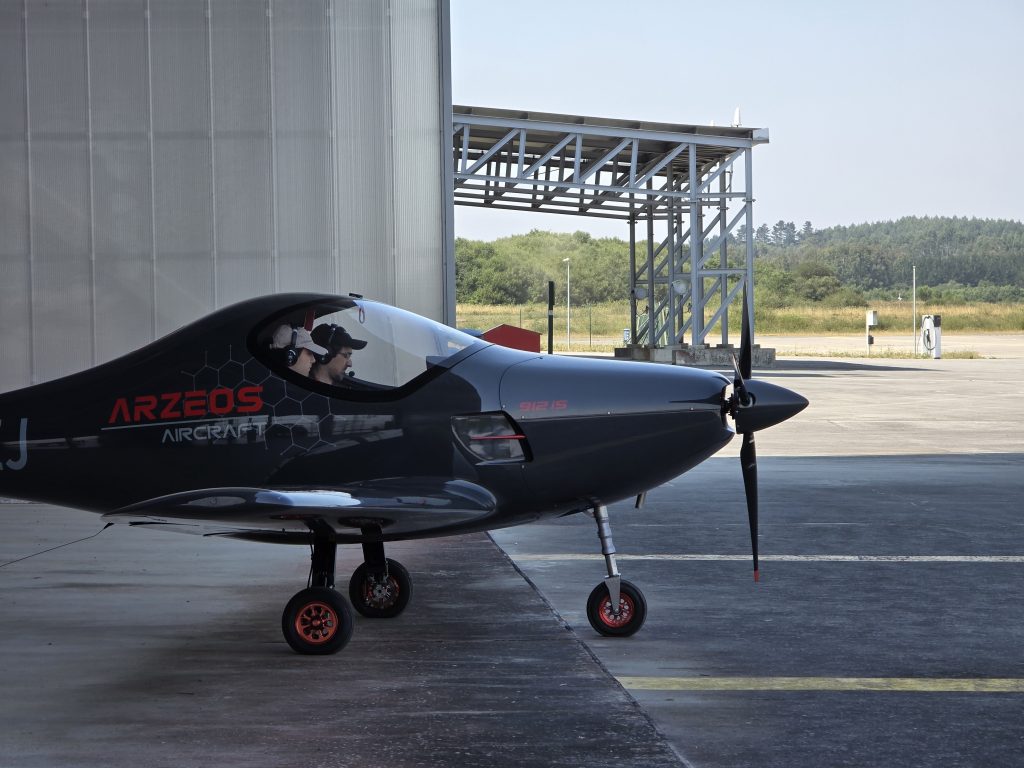
Arzeos Aircraft, part of the Business Factory Aero (BFAero) ecosystem, has begun flight testing of its Z01 two-seater ultralight aircraft, a key milestone in the development of an aeronautical project designed and manufactured in Galicia.
To this end, the start-up has access to a range of technological services enabling it to use the facilities at the Rozas Aerial Research Centre (CIAR), located at Rozas aerodrome in Castro de Rei (Lugo). This centre is a joint initiative of the National Institute of Aerospace Technology (INTA) and the Galician Regional Government.
Based in Silleda (Pontevedra), Arzeos designs, manufactures and markets piloted two-seater microlight aircraft, with a value proposition based on innovation, safety, performance and comfort, incorporating its own technological solutions into both the aircraft’s design and its systems.
A key milestone in the development of the Z01
The start of flight testing represents a significant step forward for Arzeos and brings the project closer to its next objectives. The company is currently working towards certification of the Z01, a necessary step to subsequently move towards its production and commercialisation.
This progress has been accompanied by a growing international presence. In April 2026, Arzeos unveiled the Z01 at AERO Friedrichshafen, one of the leading international general aviation trade fairs, showcasing the development of its aircraft to industry professionals and potential customers.
From incubation to consolidation at BFAero
Arzeos’s evolution is also reflected in its journey within Business Factory Aero. The company took part in the 5th edition as part of the Incubation programme, subsequently progressed to the Acceleration programme in the 6th edition, and completed the 7th edition as part of the Consolidation programme.
This journey reflects the gradual maturation of a project that has progressed from its early development stages to achieving technological milestones such as the start of flight testing of the Z01.
BFAero: driving aerospace talent and innovation
The case of Arzeos highlights the role of BFAero as a platform supporting the development and growth of innovative companies in the aerospace sector, accompanying them through the different stages of their evolution.
Since its launch in 2018, BFAero has supported 49 projects, created 15 new technology companies and facilitated the relocation of 21 companies to Galicia, contributing to the creation of more than 320 skilled jobs. The projects have also attracted more than 16 million euros in investment.
Arzeos is now entering a new phase focused on moving towards certification of its aircraft and continuing to prepare for its market launch.
A start-up may spend years developing a new aircraft, a smart system for drones, an autonomous navigation algorithm or space communications technology. However, if that innovation is not properly protected, the real value generated may end up in the hands of third parties.
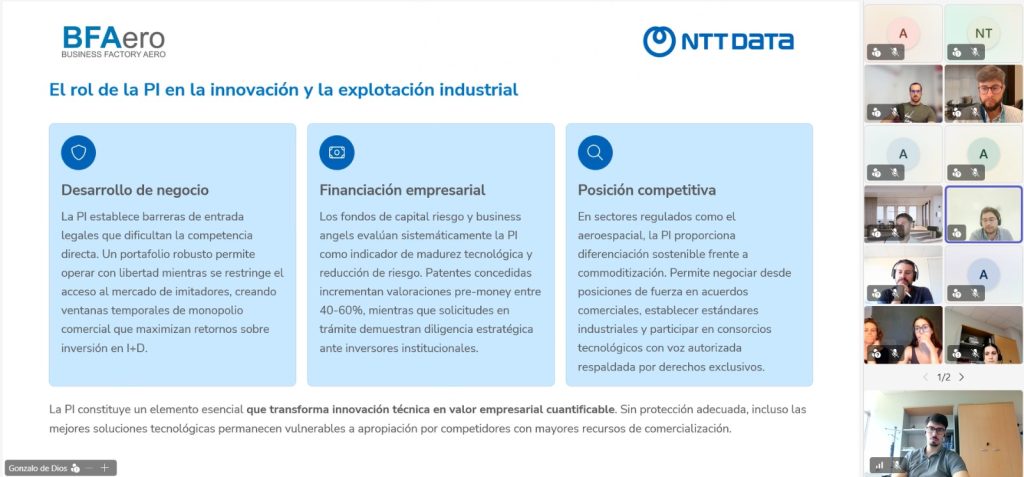
With this in mind, the projects taking part in the 7th edition of Business Factory Aero (BFAero) attended a dedicated session on Industrial Property (IP) and its impact on business. Developing cutting-edge technology is only the first step; turning it into a competitive business also requires building a solid Industrial and Intellectual Property strategy.
BFAero projects receive specialist training and support to identify their technological assets, define the best protection strategy and prepare their technology to navigate investment processes, industrial collaboration and internationalisation with greater confidence.
Innovation alone is not enough. You have to know how to protect it.
In technology-intensive sectors such as aerospace, aviation and unmanned aerial vehicles (UAVs), industrial and intellectual property (IP) is no longer merely a legal matter but has become a strategic business asset.
IP protects a company’s ability to grow, attract investment, negotiate with large corporations and maintain a sustainable competitive advantage. Numerous studies show that, in the aerospace sector, intellectual property accounts for up to 80 per cent of a company’s value and is one of the aspects most closely scrutinised by investment funds during due diligence.
Why is it so important for an aerospace start-up?
In a market as competitive as the aerospace sector, where development cycles are long and investment levels are high, protecting innovation effectively can make the difference between leading the market and losing it.
Industrial property refers to the set of rights that protect a company’s innovations, technological developments and distinctive signs. Its purpose is not merely to prevent others from copying a technology; it also enables:
Increase the company’s valuation
Creating barriers to entry against the competition
Facilitate investment rounds
Negotiating technology licences
Monetising the results of R&D
To strengthen the company’s position with customers and industry partners
What sort of industrial property does a company in the aerospace sector need?
The same technology may be protected simultaneously by several legal instruments, each designed to protect a different aspect of the project.
Patent. Protects a new, non-obvious technical solution with industrial application for up to 20 years, provided that the legal requirements are met. It is the best option in cases such as the development of a new propulsion system, the design of an innovative sensor or a new flight control system.
2. Copyright. This protects the original expression of a creation. It does not protect the idea itself, but rather its manifestation. Copyright arises automatically, although it is advisable to strengthen the evidence of authorship through registration or version control systems. It is particularly suitable for software, source code, interfaces, APIs, technical documentation, software architecture and graphic materials.
3. Databases. These protect the significant investments made in collecting, organising or verifying data. They are becoming increasingly important for companies developing artificial intelligence, autonomous navigation, predictive systems, fleet management platforms and Big Data-based solutions.
4. Trade secrets. These cover any information that derives its value precisely because it remains confidential. They are particularly recommended where technology is difficult to reverse-engineer or evolves very rapidly, such as predictive algorithms, AI models, training parameters, know-how, industrial processes, technical configurations or manufacturing strategies.
5. Brands. A means of safeguarding a company’s commercial identity. Essential for building a reputation and differentiating a company’s offering in international markets. A brand comprises the following elements: company name, logo, product name and slogan.
6. Industrial designs. These protect the external appearance of a product, its visual appearance. The shape of a drone, the exterior design of an aircraft, the casing of a sensor or the visual configuration of an autonomous robot.
Which is better: a patent or a trade secret?
The projects had the opportunity to address frequently asked questions, such as whether it is better to opt for a patent or a trade secret. Although in many cases the best strategy is to combine both approaches, there are differences between them.
A patent is more advantageous when the product can be easily copied, when it is necessary to showcase the technology to the market, when the aim is to attract investment, or when there is an interest in holding registered assets. Conversely, it is advisable to maintain secrecy when the technology cannot be easily discovered, when the know-how lies in internal processes, or when the innovation is constantly evolving.
Can industrial property generate income?
One of the most significant aspects of the session was the discussion of IP as a factor that generates economic value for the project. The main avenues for monetisation include:
Marketing of protected technology products
Technology licensing
Assignment or sale of rights
Creation of spin-offs
Technology transfer agreements
Utilización de la PI como activo en procesos de inversión o financiación
Además, disponer de una estrategia sólida de Propiedad Industrial mejora la posición negociadora frente a grandes empresas del sector aeroespacial y facilita la colaboración en proyectos internacionales de I+D+i.
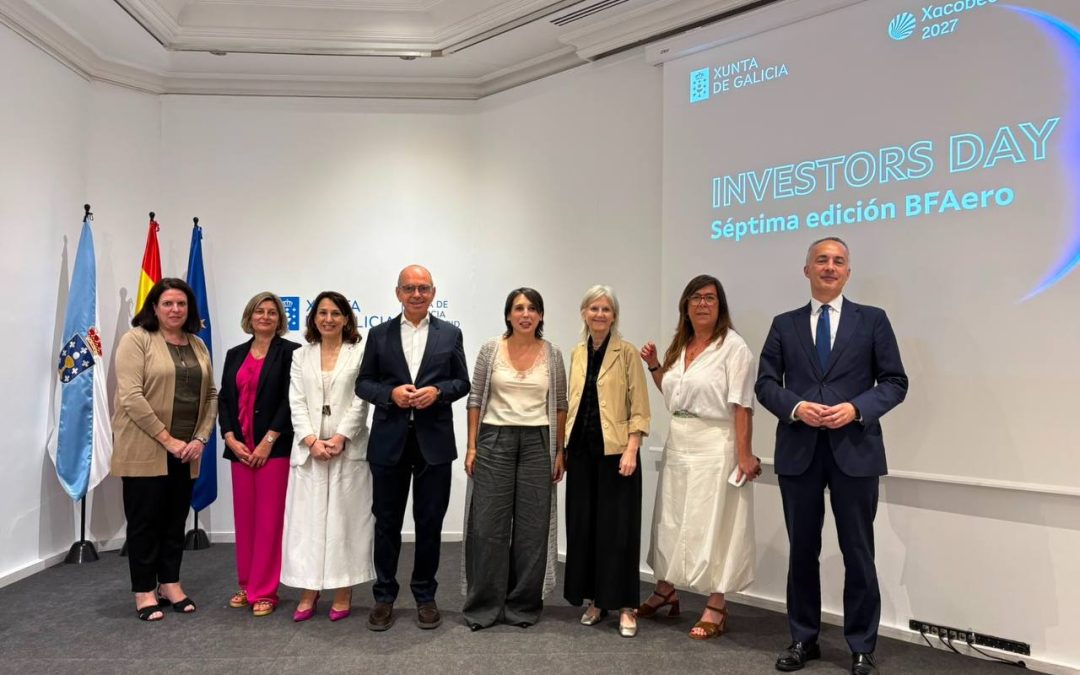
The Regional Minister for Economy and Industry, María Jesús Lorenzana, accompanied by the director of Igape, Covadonga Toca, took part in the Investor Day organised by Business Factory Aero (BFAero) and XesGalicia, held at the Galician Economic Office in Madrid, where she emphasised that it is “crucial” to connect start-ups with investment firms, as this “ensures their financial viability and accelerates their growth in the market”.
During Investor Day, the regional minister explained that “we identify and support many innovative projects, but these projects need to establish themselves in the market and continue to grow. And we cannot achieve this through Igape or XesGalicia alone: we need private investment. It is therefore essential that we use our Economic Office as a showcase for everything that is being done in Galicia to attract that investment”.
At the event, 18 investment firms specialising in deep tech, space tech, artificial intelligence, cybersecurity, mobility, aerospace, defence and dual-use technologies gathered at the Galician Economic Office in Madrid with eleven technology projects from the 7th edition of BFAero and three established companies from the accelerator’s ecosystem, with the aim of exploring opportunities for investment, co-investment and scaling up in high value-added technologies.
Galicia, an attractive environment for specialised investment
Galicia continues to build an ecosystem capable of attracting talent, generating high-impact innovation and sparking the interest of specialist national and international investors, thereby transforming technological potential into real opportunities for economic growth and skilled employment.
BFAero, the Galician Regional Government’s aerospace accelerator, forms part of the Strategic Initiative on Security, Defence and Aerospace, a roadmap that aims to mobilise up to 900 million euros in investment by 2030, supported by public investment of 183 million euros aimed at strengthening the region’s industrial, technological and business capabilities in sectors considered strategic for technological autonomy and European competitiveness.
Since its launch in 2019, BFAero has supported the creation of 49 new businesses. More than 80 per cent of them are still active and growing. Together, these companies have created more than 310 skilled jobs and generated an annual turnover of more than 28 million euros.
In the last two rounds, BFAero companies have raised more than 14 million euros, with around 70 per cent coming from private equity, confirming the programme’s ability to transform strategic technologies into companies that are attractive to investors.
Several start-ups linked to the BFAero ecosystem have also gained international recognition by being selected for leading programmes such as DIANA, NATO’s innovation accelerator, or by attracting investment from strategic organisations such as the NATO Innovation Fund, thereby consolidating the global profile of the Galician aerospace ecosystem.
From technology to the market
BFAero’s methodology supports projects throughout the entire business development process, from technology validation to investment readiness, addressing key aspects such as the business model, market strategy, intellectual property, commercial validation, funding strategy and links with major industry leaders.
This initiative enables start-ups to connect with investors by showcasing their distinctive technologies, highly specialised teams and value propositions geared towards markets with significant growth potential, particularly in dual-use sectors with applications in the civil, industrial, security and defence sectors.
Investor Day thus reinforces BFAero’s role as a platform for generating investment opportunities in aerospace, security, defence and dual-use technologies, and as a bridge between technological innovation, industry and private capital.
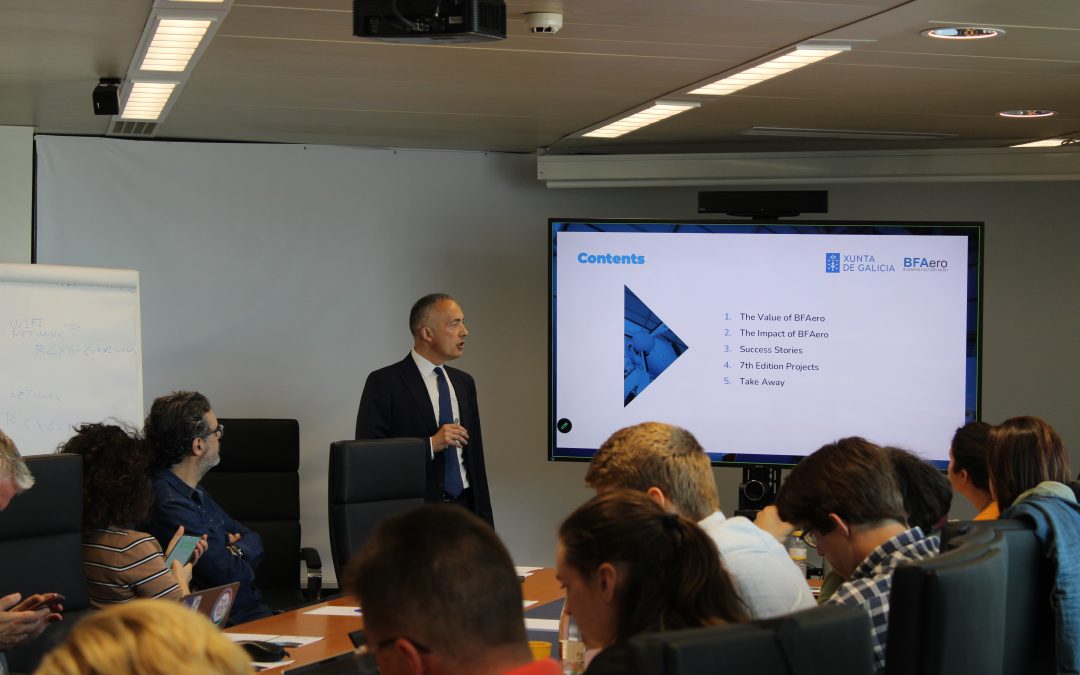
The Business Factory Aero (BFAero), the aerospace accelerator backed by the Regional Ministry of Economy and Industry, has supported 49 business projects since 2019, 15 of which are start-ups. BFAero has demonstrated its ability to attract entrepreneurial talent from other regions, as some of these companies have relocated to Galicia from Catalonia, the Valencian Community, Madrid and Castile and León, as well as from other countries such as Norway, Uruguay and Portugal.
Overall, the companies have created more than 310 skilled jobs, generated a cumulative turnover of 28.6 million euros and made investments totalling 16 million euros. The economic impact generated by the companies in the accelerator programme reflects Galicia’s ability to transform innovative projects into business activity that has an impact across the whole region.
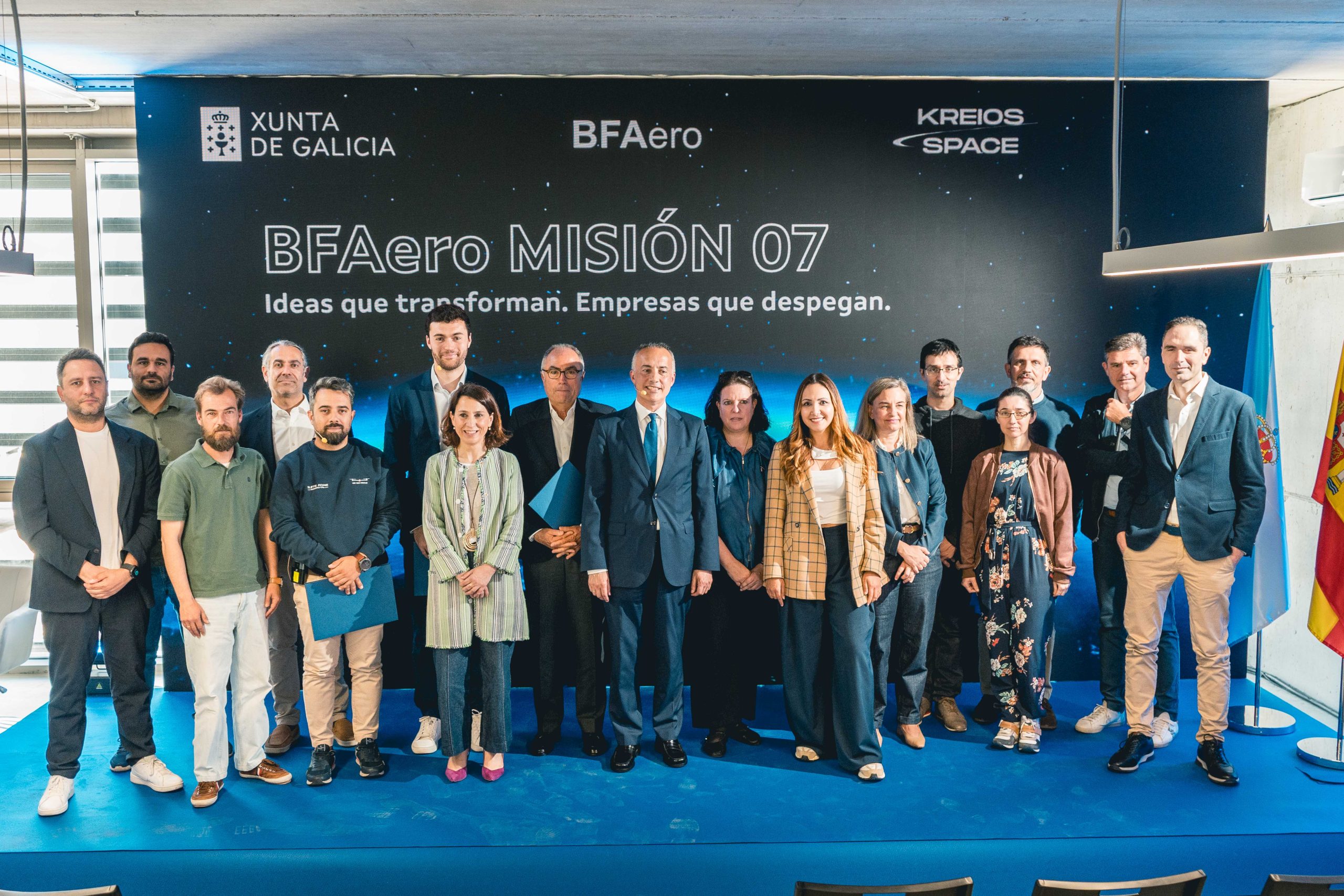
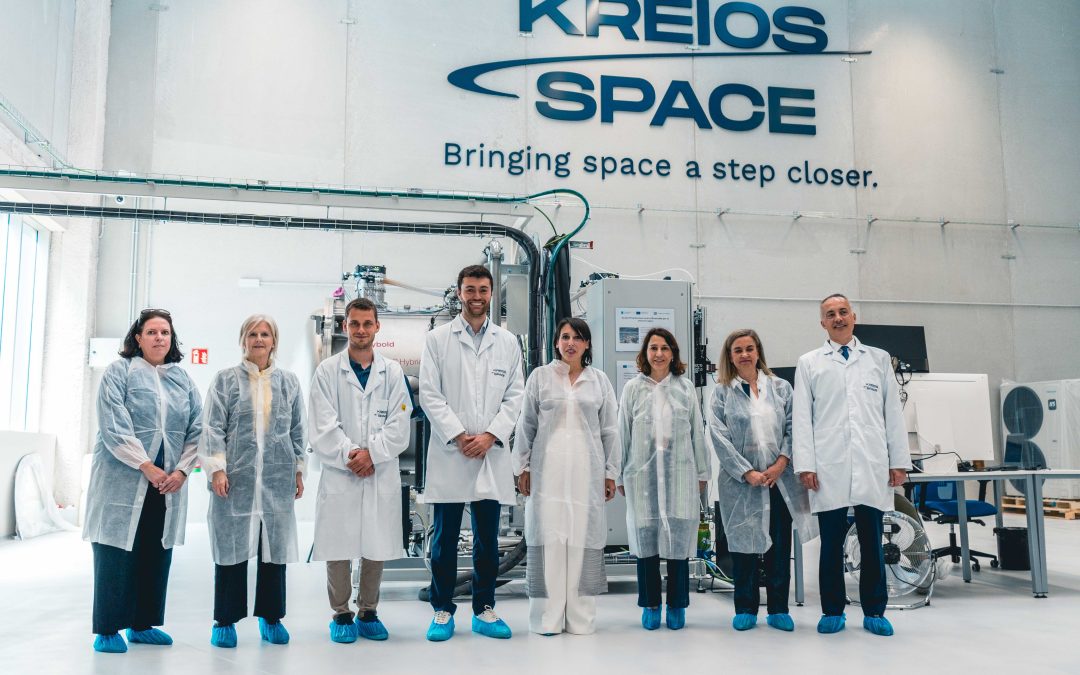
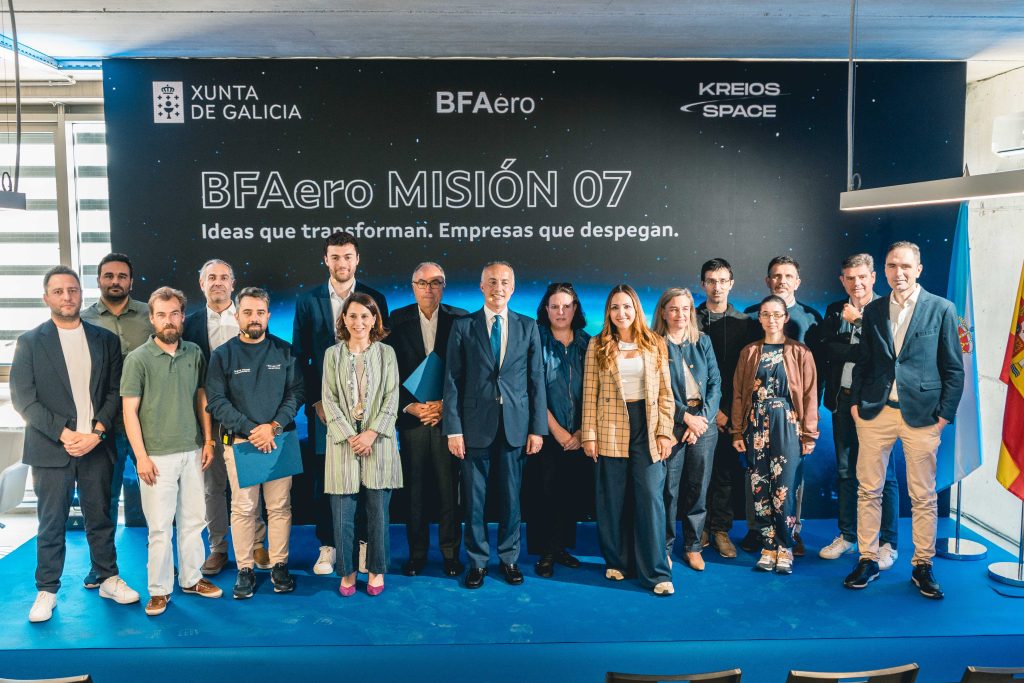
The impact of the accelerator programme was highlighted during the graduation ceremony for the sixth cohort and the launch of the seventh, which took place at the premises of Kreios Space, a company that has recently set up in the Porto do Molle industrial estate (Nigrán). The event was attended by the Regional Minister for Economy and Industry, María Jesús Lorenzana, who gained a first-hand insight into the Galician company’s projects.
An industrial footprint across Galicia
BFAero’s industrial footprint in Galicia extends across the entire region. Notable projects include Kreios Space and Lupeon in Nigrán; Aguia Analítica in Oleiros; Aeromedia and ITG Drone Solutions in A Coruña; Arzeos Aircraft in Silleda; Luxit in Ourense; and Vig-Sec Drone in Lugo.
Furthermore, the projects from the fifth and sixth editions have secured more than 14 million euros in public and private funding. It is worth noting that nearly 70 per cent of these funds come from private investment funds, a figure that demonstrates the market’s confidence in the technological capabilities and growth potential of the companies that have emerged from the programme.
A public-private partnership ecosystem
After six editions, BFAero has established itself as one of the key instruments for supporting technological entrepreneurship and the development of the aerospace industry in Spain. The programme collaborates with more than 55 organisations, including leading companies (such as Airbus, Avincis and Telespazio), technology centres, Galician universities and companies across the value chain.
The accelerator forms part of the 2025–2030 Strategic Initiative on Security, Defence and Aerospace, spearheaded by the Regional Ministry of Economy and Industry, which has a public budget of 183 million euros and an estimated capacity to mobilise around 900 million euros through public-private partnerships.
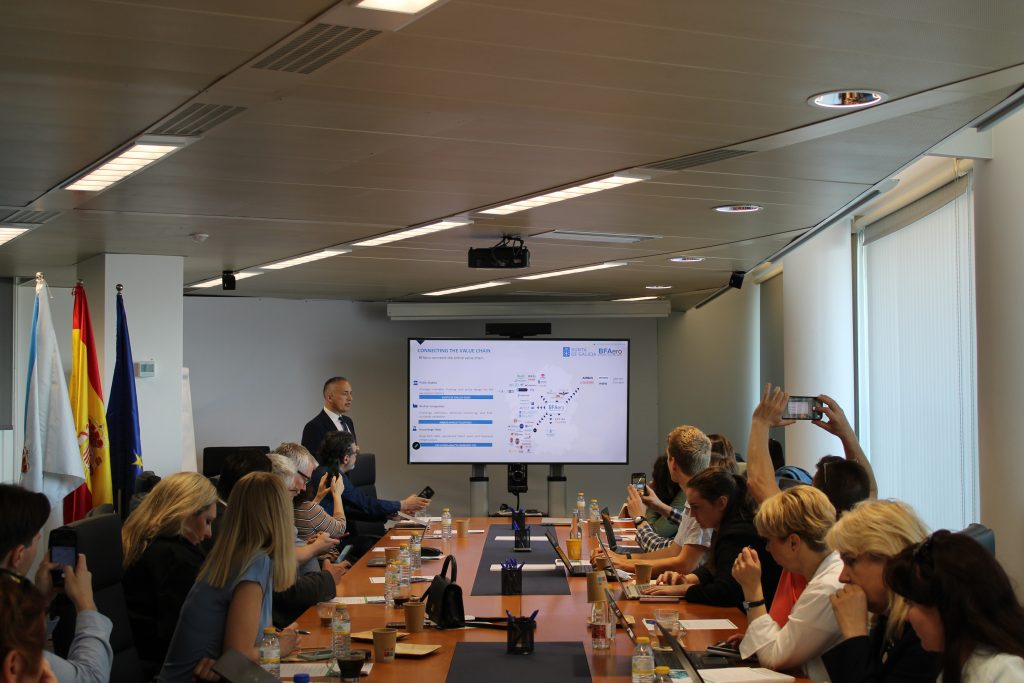
BFAero took part in the seventh interregional meeting of the European projectMAE (Moving Towards Aerospace) cas a benchmark for a vertical accelerator model. This is an Interreg Europe initiative in which ten regions from seven countries, including Galicia, are working together to build more competitive, innovative and connected aerospace ecosystems.
Europe is turning its attention to Galicia through an exchange programme that is attracting increasing interest and has three objectives:
The development of a robust aerospace ecosystem
Transforming talent and innovation into viable businesses
The design of a public incubation and acceleration programme with a real impact.
During the event, the team behind the aerospace accelerator – backed by the Galician Regional Government and run by the CEL Foundation – shared some key elements of its model. Representatives from the Netherlands, Norway, Italy, the Czech Republic, Romania, Serbia, Ukraine and Ireland expressed interest in the five elements underpinning the BFAero model:
Governance
Involvement of leading companies
Public-private partnership
Sector-specific expertise
The ability to generate economic and industrial impact in the region.
Now in its seventh year, BFAero has established itself as one of the key drivers of aerospace entrepreneurship in Spain. Its track record demonstrates the value of combining institutional support, strategic vision and industry connections to support technology start-ups as they grow and consolidate their position.
The results speak for themselves:
Creation of more than 275 skilled jobs
A total of €14 million raised by the supported projects
Establishment of a collaborative network comprising more than 55 organisations from the aerospace and technology sector.
Behind these results lies the sustained commitment of the Xunta de Galicia, which has driven the programme by integrating it into a long-term strategic vision known as the Strategic Initiative on Security, Defence and Aerospace 2025–2030 (Iesda), which has been allocated €183 million in public investment and is estimated to be capable of mobilising around €900 million through public-private partnerships.
BFAero plays an active role in this strategy, helping to strengthen Galicia’s aerospace ecosystem and promote the region internationally as a hub for innovation, industry and technology.
Para ofrecer las mejores experiencias, utilizamos tecnologías como las cookies para almacenar y/o acceder a la información del dispositivo. El consentimiento de estas tecnologías nos permitirá procesar datos como el comportamiento de navegación o las identificaciones únicas en este sitio. No consentir o retirar el consentimiento, puede afectar negativamente a ciertas características y funciones.
Funcional
Always active
El almacenamiento o acceso técnico es estrictamente necesario para el propósito legítimo de permitir el uso de un servicio específico explícitamente solicitado por el abonado o usuario, o con el único propósito de llevar a cabo la transmisión de una comunicación a través de una red de comunicaciones electrónicas.
Preferencias
El almacenamiento o acceso técnico es necesario para la finalidad legítima de almacenar preferencias no solicitadas por el abonado o usuario.
Estadísticas
El almacenamiento o acceso técnico que es utilizado exclusivamente con fines estadísticos.El almacenamiento o acceso técnico que se utiliza exclusivamente con fines estadísticos anónimos. Sin un requerimiento, el cumplimiento voluntario por parte de tu proveedor de servicios de Internet, o los registros adicionales de un tercero, la información almacenada o recuperada sólo para este propósito no se puede utilizar para identificarte.
Marketing
El almacenamiento o acceso técnico es necesario para crear perfiles de usuario para enviar publicidad, o para rastrear al usuario en una web o en varias web con fines de marketing similares.