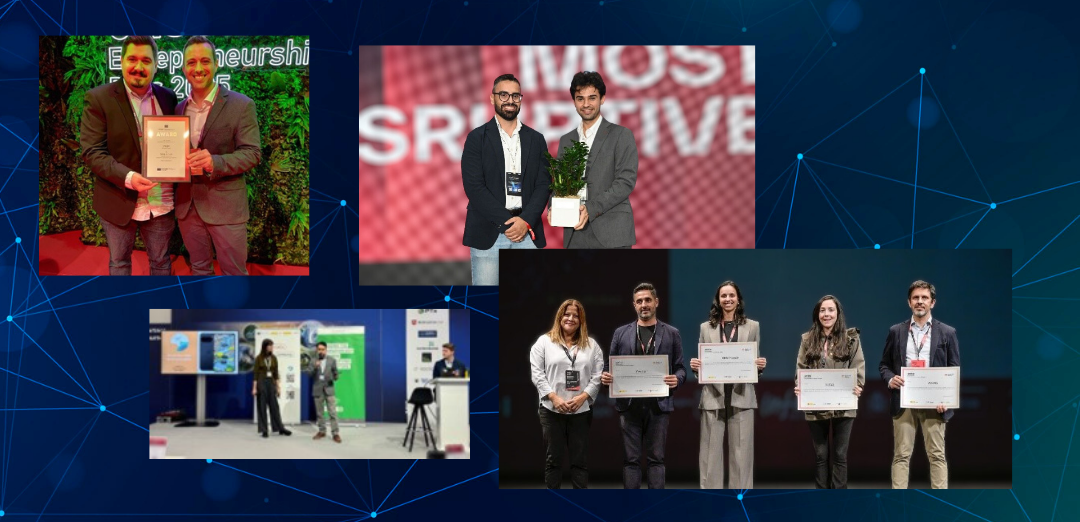
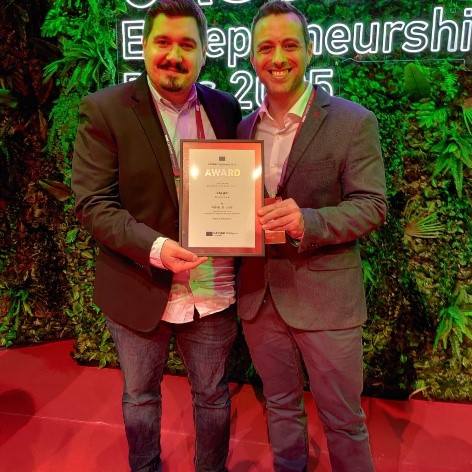
Slimop Space, a start-up promoted by Business Factory Aero (BFAero), received the National Industry Award “Bien hecho en España” in the Industrial Entrepreneurship category from His Majesty King Felipe VI during the 8th National Industry Congress, which is being held until 5 February in Bilbao.
The award recognises start-ups with a strong capacity for innovation in developing industrial projects with high added value that strengthen competitiveness, sustainability, digital transformation and the development of their own productive and technological capabilities.
The Regional Minister for Economy and Industry, María Jesús Lorenzana, congratulated the company on receiving the award and highlighted the importance of this recognition for Slimop Space, which is given to newly created companies for their innovative capacity. ‘One of the pillars,’ she said, ‘on which the advanced industrial policy is based, goes hand in hand with the company, the technology and the talent we have and want to attract to Galicia, consolidating us as a leading region in the acceleration of high-impact technological projects.’
This recognition represents significant endorsement of the company’s track record and reinforces BFAero’s role as a platform supporting technological and industrial entrepreneurship geared towards technological sovereignty. BFAero is now a strategic lever for business creation and acceleration within the framework of the Strategic Initiative for Security, Defence and Aerospace 2025-2030, promoted by the Regional Ministry of Economy and Industry, through Igape (Galician Institute for Economic Promotion) and Xesgalicia.
Slimop Space has been part of the Business Factory Aero ecosystem since its sixth edition, in which it participated in the Acceleration track. It has now been selected for the seventh edition of the programme in the Consolidation track.
The first edition of the National Industry Awards, organised by the Ministry of Industry and Tourism, recognise business initiatives that stand out for their contribution to strengthening Spanish industry, technological innovation, and the development of solutions with high economic and social impact, making excellence a hallmark of the industry.
BFAero, Spain’s best accelerator according to the Funcas ranking
Recognised for the second consecutive year as the best accelerator in Spain in the Funcas national ranking, the programme has had a strong economic and innovative impact in Galicia.
Since its launch in 2018, it has supported 58 projects, created 15 new technology companies, and promoted the relocation of 13 companies to Galicia and the creation of more than 270 skilled jobs. The projects in the 5th and 6th editions have attracted more than €14 million in investment.
SLIMOP Space will take its optical technology into space in 2027, consolidating its technological roadmap, its positioning in the sector and the growth of the start-up. SLIMOP joined the Business Factory Aero (BFAero) in 2025 during the sixth edition of the programme and has been selected for the seventh edition, within the Consolidation phase.
The company is dedicated to developing pioneering Orbital Telescopes for small satellites and nanosatellites, based on its own architecture of high-precision, low-weight optical mirrors. This innovative technology speeds up manufacturing processes, significantly reduces the weight and cost of optical systems, and facilitates their integration into scalable space platforms, with particular applications in Earth observation and space optical communications.
During 2025, SLIMOP Space has registered three technology patents, with a fourth in preparation, and has validated ultralight mirror subsystems in the laboratory at TRL5 level, a milestone that reinforces the maturity of its solution and its capacity for future demonstrations in orbit.
SLIMOP Space’s growth has been made possible thanks to the first round of pre-seed funding completed in 2025, in which the company brought in private investors specialising in the aerospace sector, who also contribute strategic management expertise. This private funding has been complemented by the support of various European, national and regional public bodies and programmes, including the European Space Agency (ESA), through the ESA BIC Barcelona programme, the Ministry of Industry and Tourism through ENISA, the Generalitat de Catalunya through ACCIÓ and the Startup Capital programme, as well as the Xunta de Galicia, with the support of GAIN, IGAPE and XesGalicia, in addition to the Business Factory Aero (BFAero) programme itself as an initiative to promote consolidated projects in the aerospace sector.
In total, more than €700,000 in capital resources have driven this first phase of R&D since the company was founded three years ago. SLIMOP Space is currently immersed in the preparation and closing of a new seed round that will enable it to consolidate its strategic plan for the period 2026-2028 and consolidate the technical specifications necessary for its leap into space.
BFAero: driving aerospace innovation
SLIMOP Space is embarking on this new phase with the aim of positioning itself as a benchmark in advanced optical solutions for space platforms, contributing to the development of efficient and competitive constellations in global markets. Its participation in BFAero and the solid institutional support it has received highlight not only the quality of the project, but also the role of the accelerator as key platform for promoting technology start-ups in strategic sectors with high technological demands.
The ultimate goal of any startup is to scale its business and sell. For this reason, Business Factory Aero (BFAero) promoted the participation of the projects from its sixth edition in the session “Mastering Sales: strategies to impact, connect and close deals”, held at the Santander Work Café in A Coruña.
A meeting designed to strengthen the commercial capabilities of companies at key stages of growth through practical, strategic and results-oriented training for the projects that are part of our ecosystem.
Practical training to turn innovation into business
During the session, high-value tools were presented that are applicable beyond the technological sphere, with a clear focus: building confidence, connecting with customers and closing deals.
During the workshop, key aspects were addressed such as:
Moving from uncertainty to confidence at any stage of the business.
Identifying customer archetypes to fine-tune the commercial approach.
The art of storytelling: how to turn a product or service into a memorable story.
The anatomy of the perfect email: structures that work and generate responses.
Strategies to tackle decisive meetings and move towards closing sales.
All of them share a common goal: to strengthen their value proposition and accelerate their market entry with a solid and effective sales strategy.
Aguia Analítica Avanzada strengthens its growth through a strategic alliance
Within the framework of this commitment to business development, one of the participating companies, Aguia Analítica Avanzada, has taken a significant step by establishing a strategic alliance with FEDS Drone-powered Solutions.
This agreement will help drive the digitalisation of public infrastructure, moving from reactive maintenance towards a predictive, efficient and data-driven model. The collaboration combines aerial data, artificial intelligence and international standards to create digital twins of road networks, improve accuracy in damage detection and increase the safety and fluidity of infrastructures.
A clear example of how training, sales strategy and the right partnerships accelerate the transformation of innovation into real impact.
A clear example of how training, sales strategy and the right partnerships accelerate the transformation of innovation into real impact.
BFAero: innovation, strategy and market
With initiatives such as this session, Business Factory Aero reaffirms its commitment to the holistic growth of startups, promoting not only technological development but also the key skills needed to compete, connect with the market and generate business.
Kreios Space and Vig-Sec Drone, companies incubated and accelerated at Business Factory Aero (BFAero), have been selected to take part in NATO’s DIANA accelerator, one of the most demanding and prestigious international programmes in the field of dual-use innovation, defence and security.
A milestone that reinforces BFAero’s positioning as a leading platform for boosting startups with high value-added technologies, capable of competing and collaborating within the main international innovation ecosystems in defence, security and aerospace. A further recognition of the talent, vision and capabilities of the companies that are part of BFAero to transform the present and build the future of the sector.
The DIANA accelerator (Defence Innovation Accelerator for the North Atlantic) promotes technological solutions with high potential impact for the Atlantic Alliance, selecting each year a very limited number of companies from among thousands of international applications.
Vig-Sec Drone: dual-use technology for a safer airspace
The Galician company Vig-Sec Drone approaches this new stage as a decisive step in its international expansion strategy and in the validation of its dual-use technology in real operational environments.
Over the coming months, the company will work on an ambitious challenge: to demonstrate that it is possible to safely manage medium- and low-altitude airspace by integrating manned and unmanned aircraft within the same airspace, even in complex and isolated contexts.
Participation in DIANA will allow Vig-Sec Drone to collaborate in exercises, tests and validations with NATO units, specialised agencies and armed forces, taking its technology to the environment where its value is truly put to the test: real operations. This progress represents a significant leap in the company’s maturity and strengthens its commitment to innovation in the service of those operating on the front line.
Kreios Space: Very Low Earth Orbit as a new strategic domain
For its part, Kreios Space has been selected for the NATO DIANA 2026 Challenge Programme, within the Resilient Space Operations challenge.
The company is working on the development of space missions in Very Low Earth Orbit (VLEO), at altitudes close to 200 kilometres, a key domain for the future of space observation and defence. Its differentiating technology, based on Air-Breathing Electric Propulsion (ABEP), makes it possible to sustain prolonged operations in these ultra-low orbits, overcoming one of the sector’s major technical challenges.
This selection recognises VLEO as a strategic reality and offers Kreios Space the opportunity to collaborate over the next six months with DIANA test centres, mentors and end users, accelerate the development of its technology with the programme’s financial support, and align it with the real needs of NATO and its allies.
Over the past few weeks, several BFAerostartups have earned recognition both nationally and internationally within the aerospace innovation ecosystem. These awards and distinctions are proof of the effectiveness of their projects, which address civil or military challenges through an innovative approach.
VALAR has been selected as one of the winners of the 2024 CASSINI Challenges, organized by the European Union Agency for the Space Programme (EUSPA). This is a major acknowledgment of the company’s commercial track record and a validation of its vision to make space operations more accessible, reliable, and efficient for the entire European space ecosystem.
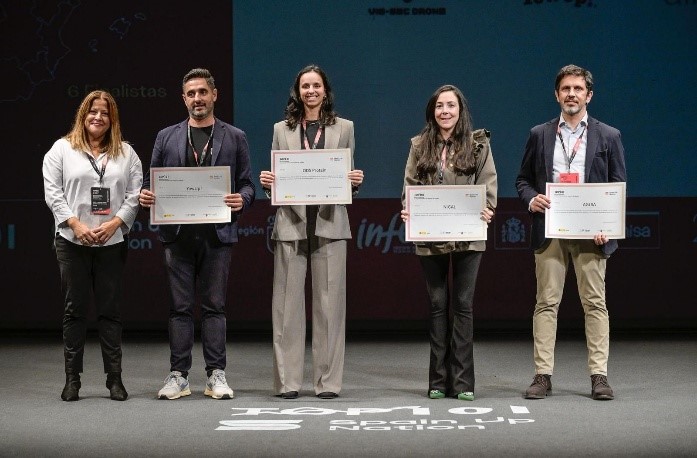
Aguia Analítica Avanzada has received the 2025 Aeronautical Innovation Award – COIAE, in recognition of its work in developing advanced technologies for the intelligent inspection and management of infrastructure. In addition, it has been recognized as one of the 101 outstanding companies in the second edition of the Top 101 Spain Up Nation Awards, an event that celebrates high-impact entrepreneurial talent in Spain.
It is also worth noting that Vig Sec Drone was likewise recognized as a Top 101 Spain Up Nation in this year’s edition.
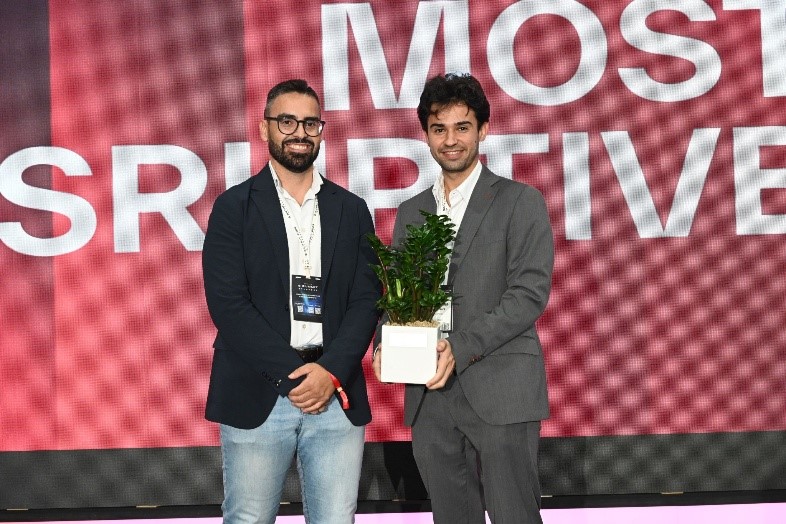
Finally, congratulations are also due to Kreios Space, which achieved great success in Korea by winning the “Most Disruptive Startup” award at South Summit Korea 2025.
All these recognitions also offer valuable opportunities to expand networks and connections for the development of future projects. Congratulations to everyone involved.
With this figure, BFAero has achieved its goal of expanding its reach beyond the national sphere, strengthening its position as a European benchmark in aeronautical and aerospace entrepreneurship.
Origin of the Projects
International projects: Seven come from European Union countries (including Italy, Norway, Denmark, Lithuania, and Bulgaria), while the rest come from Argentina, Malaysia, Turkey, India, and Switzerland.
National projects: The call also sparked significant interest, with 78 Spanish proposals, 61% of which came from regions such as Catalonia (12), Madrid (11), Andalusia (9), the Basque Country (3), and the Canary Islands (2). Galician projects account for 39% of the total, with 30 applications.
Main Thematic Areas
The submitted initiatives fall into four thematic areas:
Development of unmanned vehicle applications for specific markets, such as emergency and civil protection services or industrial infrastructure inspection (56%).
Technologies applied to the satellite sector (20%).
Creation of platforms and their components, including structures, energy, propulsion, systems, navigation, and piloting (15%).
Projects involving onboard or ground-based equipment and systems (10%).
BFAero Itineraries
The program includes three tracks, tailored to each project’s maturity level:
Incubation phase (early stage): 40% of the projects registered.
Acceleration phase (projects with a developed Minimum Viable Product (MVP) and first sales): 45% of the projects.
Consolidation phase (for companies with defined products or services and actual sales, looking to scale): 15% of the entries.
Spain’s Best Accelerator
Recognized for the second consecutive year as the best accelerator in Spain by the national FUNCAS ranking, BFAero has become a strategic driver of business creation and acceleration within the Strategic Initiative in Security, Defense, and Aerospace 2025–2030, promoted by the Regional Ministry of Economy and Industry.
The program has had a strong economic and industrial impact in Galicia. Since its launch in 2018, it has supported 58 projects, created 15 new technology companies, facilitated the relocation of 13 firms to Galicia, and generated over 270 skilled jobs. Projects from the 5th and 6th editions have attracted more than €14 million in investment.
Para ofrecer las mejores experiencias, utilizamos tecnologías como las cookies para almacenar y/o acceder a la información del dispositivo. El consentimiento de estas tecnologías nos permitirá procesar datos como el comportamiento de navegación o las identificaciones únicas en este sitio. No consentir o retirar el consentimiento, puede afectar negativamente a ciertas características y funciones.
Funcional
Always active
El almacenamiento o acceso técnico es estrictamente necesario para el propósito legítimo de permitir el uso de un servicio específico explícitamente solicitado por el abonado o usuario, o con el único propósito de llevar a cabo la transmisión de una comunicación a través de una red de comunicaciones electrónicas.
Preferencias
El almacenamiento o acceso técnico es necesario para la finalidad legítima de almacenar preferencias no solicitadas por el abonado o usuario.
Estadísticas
El almacenamiento o acceso técnico que es utilizado exclusivamente con fines estadísticos.El almacenamiento o acceso técnico que se utiliza exclusivamente con fines estadísticos anónimos. Sin un requerimiento, el cumplimiento voluntario por parte de tu proveedor de servicios de Internet, o los registros adicionales de un tercero, la información almacenada o recuperada sólo para este propósito no se puede utilizar para identificarte.
Marketing
El almacenamiento o acceso técnico es necesario para crear perfiles de usuario para enviar publicidad, o para rastrear al usuario en una web o en varias web con fines de marketing similares.